Outdoor photography offers endless opportunities to capture stunning images, from majestic landscapes to candid moments in natural light. Whether you’re shooting with a professional camera or a smartphone, the right techniques can elevate your outdoor photography game. Here’s a guide packed with tips to help you capture breathtaking shots in the great outdoors.
1. Leverage the Golden Hour
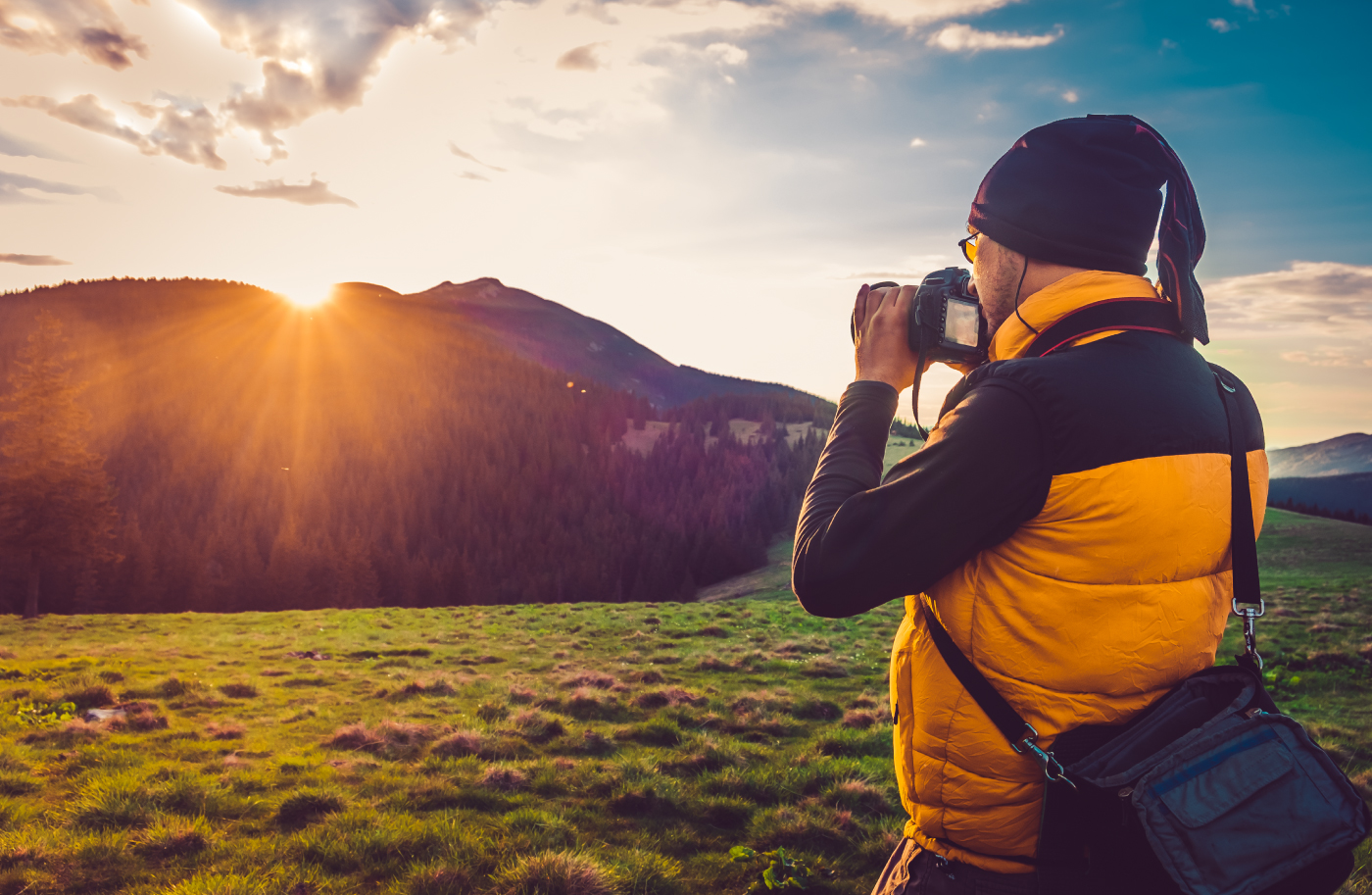
The time just after sunrise and before sunset—known as the golden hour—provides soft, warm lighting that flatters subjects and adds depth to your images.
- Why It Works: The lower angle of the sun reduces harsh shadows and creates a dreamy, golden glow.
- Pro Tip: Use the golden hour for portraits, landscapes, and silhouettes to enhance the mood of your shots.
2. Use Natural Light to Your Advantage
Outdoor photography often depends on natural light, so understanding its nuances is key:
- Midday Challenges: Harsh sunlight can create strong shadows. Use a diffuser, find shade, or shoot with the sun behind your subject for backlighting.
- Cloudy Days: Overcast skies provide soft, even lighting, ideal for portraits and detailed shots.
3. Scout Your Location
Researching and visiting your location beforehand helps you plan your shots.
- Find Unique Angles: Explore different perspectives, like shooting from a low angle or climbing higher for an aerial view.
- Note the Light: Observe how light interacts with the environment at different times of day.
- Look for Details: Pay attention to elements like reflections, leading lines, or framing opportunities.
4. Play with Composition
A strong composition can transform a good photo into a great one. Use these techniques:
- Rule of Thirds: Place your subject off-center to create balance and visual interest.
- Leading Lines: Use natural lines like roads, rivers, or fences to draw the viewer’s eye into the frame.
- Framing: Frame your subject using arches, tree branches, or windows to add depth.
- Negative Space: Leave empty areas in your frame to emphasize the subject.
5. Adjust Your Camera Settings
For those using DSLR or mirrorless cameras, manual adjustments give you greater control:
- Aperture: Use a wide aperture (low f-number) for portraits to blur the background or a narrow aperture (high f-number) for landscapes to keep everything in focus.
- Shutter Speed: Adjust for motion. A fast shutter speed freezes action, while a slow one creates motion blur, like silky waterfalls.
- ISO: Keep ISO low for daylight shots to avoid grain. Increase it in low light but watch for noise.
6. Focus on the Details
While grand landscapes are captivating, don’t overlook smaller elements:
- Macro Shots: Get close to flowers, insects, or textures for intricate details.
- Patterns and Colors: Highlight the harmony or contrast in nature’s design.
7. Incorporate People or Objects
Adding a person, pet, or object to your photos gives context and scale:
- Human Connection: A hiker on a trail or a child playing adds storytelling to your shot.
- Perspective: Show how small a person appears against a towering mountain or vast ocean.
8. Be Ready for Action
Nature is unpredictable, and moments can pass in the blink of an eye:
- Use Burst Mode: For fast-moving subjects like wildlife or waves, burst mode ensures you don’t miss the perfect shot.
- Stay Alert: Keep your camera handy and be patient for fleeting moments like a bird in flight or the perfect light on a scene.
9. Experiment with Weather Conditions
Dramatic weather often creates the most memorable photos.
- Rain: Capture reflections in puddles or raindrops on surfaces.
- Fog and Mist: These add mystery and depth to landscapes.
- Snow: Look for contrasts and textures, but be mindful of white balance to avoid overly blue tones.
10. Edit with Purpose
Post-processing can enhance your outdoor photos:
- Adjust Exposure: Correct shadows and highlights to balance the image.
- Enhance Colors: Subtle tweaks to saturation and vibrance can make colors pop.
- Sharpen Details: Emphasize textures and fine details in landscapes or macro shots.
Free tools like Snapseed or Lightroom Mobile work well for beginners, while professionals might use Adobe Lightroom or Photoshop for advanced editing.
11. Respect Nature
While capturing the beauty of the outdoors, remember to tread lightly:
- Leave No Trace: Avoid disturbing wildlife or damaging plants.
- Stay on Trails: Preserve fragile ecosystems by sticking to marked paths.
12. Keep Gear Essentials Handy
Depending on the environment, the right gear can make a difference:
- Tripod: Essential for low-light shots, long exposures, and steady framing.
- Polarizing Filter: Reduces glare and enhances skies or water surfaces.
- Lens Options: Wide-angle lenses are great for landscapes, while telephoto lenses bring distant subjects closer.
Conclusion
Outdoor photography is about embracing the beauty of the natural world and capturing it with your unique perspective. With thoughtful planning, creativity, and an appreciation for your surroundings, you can create stunning photos that tell a story and inspire others.
So grab your camera, step outside, and let the world be your canvas!